Monday, February 26, 2024

The Evidence for Evolution: Science Works

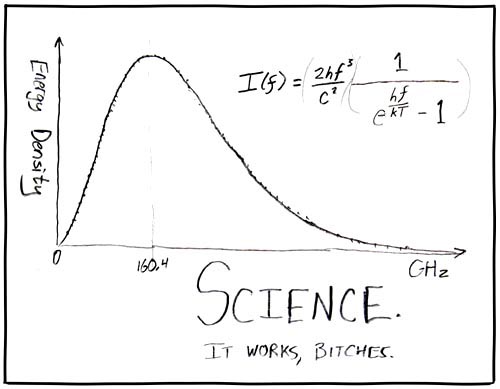
Perhaps the best evidence for evolution, is that the science works. Practically every day we see results from evolution leading to new things; inventions, patents, medical treatments, and fruitful new areas of research and discovery. These are all hallmarks of good science. If someone thinks evolution is wrong, then it is upon them to offer anew theory - a theory that can do everything the old theory can do AND MORE. 

MOST of us have seen numerous TV commercials advertizing medical trearments that derive from evolutionary theory. There is going to be a lot more of that in the next 20 years and beyond.

There were other theories of evolution before Darwin published "Origin, and none of these remain as more than the history of science. Darwin's theory has long since been surpassed and expanded, resulting in the Modern Synthesis. Darwin's key contribution is still an important part of that, and can be summarized in three words: "Selection Happens Naturally". Even the most ardent of evolution deniers, when asked if they agree with this simple hypothesis, say nothing, or accept it conditionally (and that's a good start.)


I rejoined one of those silly FB groups where claims "there is no evidence for evolution" appear several times a day. This prompted mr to finally write the down for future use, rather than typing it out every time. I should have done this years ago! 

*

Monday, November 22, 2021

Arguing Against Conspiracies

Taken out of context, but you will figure it out ...

First they describe themselves as a repressed minority under threat from "The Other". Next they make outrageous claims, and of course reasonable people will refute these claims as untrue. Then they point to these "attacks" on their belief as confirmation they are being repressed. There is also the thrill of righteous indignation, "knowing" they are right and standing up to The Other. 

Arguing directly does not help, but only confirms their bias and feeds their indignation. Sometimes, with much patience, you can catch them contradicting themselves and point this out. I've learned to do this with certain Christians I disagree with, but Christianity has a central belief (the Resurrection) which all understand. Not so with conspiracies, they don't have any clear definition or fixed beliefs you can pin down. Instead you need to look for Common Sense arguments. ie: If what they believe is true there should be consequences; where are the consequences? 

(If vaccines are so harmful, then why don't we see more problems among the millions of vaccinated people? Is it even possible to put microchips into a vaccine? How does that work? If they can put microchips in a vaccine then why not in our food? Avoid the vaccine won't help because they are probably chipped already!) 

DON'T argue science with them, at least not at first. Draw them out and ask questions, looking for contradictions. Make them defend their own beliefs. 

And one more time for emphasis: 

MAKE THEM DEFEND THEIR OWN BELIEFS

Wednesday, December 20, 2017

BREAKING NEWS: Internet headlines are Truncated

Ever notice how the news headlines, or titles of article that appear online, aren't long enough to actually tell you what the story is about? I think this MUST be intentional, because until you click on the story, Google - or whatever service you are viewing - gets no information about our interests. They make us click to actually view the content, driving traffic to the sites and stories we might otherwise avoid.

This isn't always the case, as we see in the Gizmodo article from my screencap, but it's still not very informative. The other three are perfect examples: Incomplete information about a takedown notice, American taxes, and humans outliving the universe (that last one is guessable). We are given 7-9 words to determine how to spend our time. It could easily be more, but it's not profitable to the providers to do that. They want our time and attention, because that's how they can sell ads. Actually providing news and information is only a secondary concern.

I suppose this is just another reminder that if we aren't paying for the product, they WE ARE the product. It's not surprising, but it does get tiresome.

Wednesday, September 27, 2017

In Response to C. S. Lewis


C.S. Lewis Reasoning on Atheism

‎"Supposing there was no intelligence behind the universe, no creative mind. In that case, nobody designed my brain for the purpose of thinking. It is merely that when the atoms inside my skull happen, for physical or chemical reasons, to arrange themselves in a certain way, this gives me, as a by-product, the sensation I call thought. But, if so, how can I trust my own thinking to be true? It's like upsetting a milk jug and hoping that the way it splashes itself will give you a map of London. But if I can't trust my own thinking, of course I can't trust the arguments leading to Atheism, and therefore have no reason to be an Atheist, or anything else. Unless I believe in God, I cannot believe in thought: so I can never use thought to disbelieve in God."
—C.S. LewisThe Case for Christianity, p. 32.

Suppose there was an intelligence behind the universe, a creative mind. In that case, something may have designed my brain for the purpose of thinking. 

It is only because the atoms inside my skull are arranged just so that gives me the sensation I call thought. But, if so, how can I trust my thinking to be my own? 

It’s like a machine ever stamping out the same metal parts, never able to vary from its predetermined task. 

But if my thinking is not my own, of course there is no argument, about anything, for I am only what I was made to be, and incapable of being otherwise.

And therefore I cannot believe in God, or anything else. I am incapable that act. I have no reason. I have no thought. Belief ceases to have meaning. 

The point being, something independent of God must exist, some "jug of spilled milk" that has splashed itself into a map of my life, or I am nothing more than a mindless automaton. 

Take THAT, presuppositional apologetics!

Friday, February 12, 2016

Deconstructing Dembski (2005)

Introduction

In his 2005 paper Specification: the pattern that signifies intelligence, William Dembski tries to give a rigorous definition to his concept of Complex Specified Information (CSI). This paper has numerous problems, the most painful of which is repeated equivocation of terms, making it very difficult to read. Once I got past the equivocation, I discovered basic errors in how probabilities are calculated and interpreted. One error in particular is very hard to swallow, and anyone with a basic understanding of probability should know better. Dembski has a master’s degree in statistics and a PhD in mathematics, therefore it is reasonable to think he knows better. How could he be so wrong?

Here's the spoiler, in case you don't care to read the whole post:

  • The concept of CSI in Dembski (2005) is based on a meaningless number, which is interpreted as probability even though it is not. As a consequence, CSI cannot have the meaning and interpretation stated. Dembski's math is wrong.
More after the fold ...


Monday, January 18, 2016

Tomatoes, More Dangerous Than Ever!

You see!?!? I TOLD YOU TOMATOES ARE DANGEROUS!!!!

image source
“We have suffered a Code 9 containment breach,” said head biotechnologist Stewart Klein, explaining that he had used a dedicated emergency line to contact Monsanto headquarters in St. Louis, which immediately sent back a directive ordering all laboratory personnel to shelter in place until further notice. “As of now, we’ve sealed off all stairwells below subbasement 12, but this hardy, disease-resistant tomato appears to have overridden all of our fail-safe backup protocols. We have an asset on the loose, and nobody will be allowed in or out until this thing is stopped.”
Full details on this breaking story available at The Onion, America's Finest News Source.

Also, Bonus Points it you caught the Andromeda Strain reference.  :-)

Sunday, November 22, 2015

Ken Ham and the AiG Follies

I have a several pages of notes from Ken Ham's recent presentation, and wrote about one example of the things he gets wrong. This could keep my busy blogging for a year if I so chose, but I think it's not worthwhile making a point-by-point rebuttal to everything he said. That don't mean I can't have some fun with it!

Therefore, for your amusement, I am going to simply list all the greatly wrong points I noted. In other words, pretty much everything. Quotes are approximate, everything else is my paraphrase, but I'll try to keep them as close to the original as my notes and recollection will allow. I won't bother with the rebuttals, as everyone probably knows them all anyway. Well, maybe a few ... I will decorate with a few quips and comments [in brackets] and irrelevant images along the way.

Ladies and Gentlemen, I give you Ken Ham and the AiG Follies!

"The church is losing two-thirds of the coming generations." [Gosh, I wonder why?] "We need to teach apologetics ... I have a radical approach - teach Genesis 1:1 and give them a foundation to understand. ... We have lost Biblical authority!" [another mystery! AND a comic book!] "Come see the Ark!" [Instead of learning something.]

"Bill Nye the Pagan Guy, Bill Nye the Atheist Guy, whatever." [I don't think he likes Bill Nye, nor is he fond of Eugenie Scott]

"Radiometric error ..."
"Molecules to Man ..."

Experiment or observational science versus Origins or historical science: "Ask them, 'Were you there?'" [The guy sitting in front of me keeps nodding his head vigorously every time he this Ham makes a point.]
Science is brainwashing
Naturalism is atheism [yawn]
"Bill Nye says the Ark park will undermine science education."
Evolution is unnecessary, "Show me one example of evolution leading to technical advancements". [OK, how about all the emerging field of Evolutionary Medicinegene therapies, and cures that are coming into use? Genetic algorithms too. Now show me one example of the Bible leading to a technical innovation.]

"Science says the Earth is round, and the Earth is millions of years old!" [Billions, actually.]
"The Bible says you are either for Christ or against." [False dichotomy, but whatever.]
I don't want to be too much like Bill Nye, but I call myself "Ken Ham the observational science ... um ... bloke. That's Australian for 'guy'."
"The Bible is God's observational science textbook." [His edition is rather out of date.]
"The seven day week comes from the Bible, proof the Bible is true." [Yes, he really did say pretty much that.]
"Watson and Crick, atheist scientists, discovered DNA." [Hey, we finally have a completely true statement!]
DNA is information. DNA is a language. [Noddy head guys is going to have a sore neck tomorrow.]
Werner Gitt says if there is no information, there is no matter. [Plugging some AiG book, I think.]
DNA proves God. Biochemistry confirms this. [I'd like the chemical formula for God, please.]

How many animals were needed on the Noah's Ark? All they needed were Kinds, or 'Min'. Horse kind, "We have a zorse and a zonkey at the Creation Museum petting zoo." [We still have the fossils!]
All the species we see today are the result of genetic recombination, loss of information, and sin! They are degenerate mutants. [Ham hates poodles too. Seriously hates them.] There are 10^2017 possible genetic combinations possible from just two perfect humans. Natural selection leads to all the kinds we see today. [Clearly some of us ended up in the shallow end of the gene pool.]
Every new mutation is a loss of information.
Every new species is a combination of existing genetic information.
It's all a loss of information! [Noddy head guy is bouncing like a bobblehead.]

[Ordinarily I would have a field day with all this misuse of Information, but I'm saving that for a special post.]

Ooh la la!
Atheists redefine terms to allow abortion, transgender men in women's bathrooms, gay marriage, our atheist President thinks Lucy was human.
Life begins at fertilization, not implantation [Ranting about abortion]

See? I told you!
Women can take their shirts off in public, because they ignore the Bible. [There could be worse things than women taking their shirts off.]

Millions of years is a problem for Christians [Billions is OK I guess.]
All creatures were vegetarians before the flood. [What about all those years between original sin and the flood?]
The world is decaying. "It's an ugly world, with a remnant of beauty." [This almost make me pity Ham. Almost.]

Erosion at Mt. St. Helens proves catastrophic floods can create all the geologic features we see.
"There is plenty of water for a global flood," because everything was nearly flat before the flood.
Grand Canyon lakes and surges deposits show the GC was made by The Flood.
The evidence is all there. [Noddy head shouts "Amen!"]

Al Sharpton and Jesse Jackson fuel racism.
All people are the same color, just a different shade of brown.
Darwin is responsible for racism, because people do not acknowledge absolute Biblical authority.
Science causes evil [paraphrased]
We should be shocked by what the church believes [but not his church?]
The problem with the church is that too many accept evolution and science.
With no Biblical foundation, this leads to inconsistent beliefs.
Wrong foundation, therefore abortion!
"Run rings around the atheists with Answers!" [sales pitch for his tracts]
Get your Foundations education kit, for this special low low price, today only ...

"Now it's time to pay, err ... I mean pray." Be sure to buy my crap on the way out. [And then he ends his science lecture with a prayer.]

Ladies and Gentlemen, this concludes this evening's entertainment. You've been a great audience. Come back and see us next time!

And you know what they say in show biz - Always leave them laughing. That's not too hard when your subject is Ken Ham.

Friday, November 20, 2015

Rock Paper Scissors SPOCK Lizard

Sorry Sheldon, but it should be 

Rock Paper Scissors Spock Lizard,

NOT 

Rock Paper Scissors Lizard Spock.

Here is Sheldon Cooper explaining the game:


In the original Rochambeau we have the simple rules:
Rock crushes Scissors
Scissors cut Paper
Paper covers Rock
Which we can represent as:
Rock < Paper < Scissors < Rock
where greater-than "<" represents the win/lose relationship
loser < winner
and Rock is repeated to complete the circular relationship. 


If we call this game "Rock Paper Scissors Spock Lizard" then we can write the rules like this:
Rock < Paper < Scissors < Spock < Lizard < Rock < Paper
now with Rock and Paper repeated (or just understand that it "wraps around"), and the additional rule that any sequence of three (with wrapping) is also a rule.
Rock Paper Scissors
Paper Scissors Spock
Scissors Spock Lizard
Spock Lizard Rock
Lizard Rock Paper
And now the rules are the same as the name of the game.
Image source: Hollywood Nuts!


Thursday, November 19, 2015

Ken Ham on the age of the Earth

In my last post, An Evening with Ken Ham, I stated:
[Ham] would never address a real scientific question. Ham's approach to science is is entirely superficial, and his interest in science ends the moment he finds a trivial sound-bite that he can use in his sermons.
I thought I might follow up on that with my favorite quote from the evening; a self-contradictory statement which is wrong on two levels. This was a shorter version of this quote I am using here, taken from the Ham-Nye debate of February 4, 2014 [my emphasis added]:
Image source: Patheos.com
Ham: Now, a lot of people say, by the way, the Earth's age is 4.5 billion years old. And we have radioactive decay dating methods that bound that. We certainly observe radioactive decay, whether it's rubidium –strontium, uranium – lead, or potassium-argon, but when you are talking about the past, you have a problem. Let me give you an example. In Australia there were engineers that were trying to search out about a coal mine, so they drilled down and they found a basalt layer, or lava flow that had woody material in it, branches and twigs and so on, and when Dr. Andrew Snelling, our PhD geologist sent that to a lab in Massachusetts in 1994, they used the potassium-argon dating method and dated it at 45 million years old. Well, we also sent the wood to the radiocarbon section of the same lab, and they dated it at 45,000 years old. 45,000 year old wood in 45 million year old rock. The point is, there is a problem [1].
Yes there is a problem - Ham just said the Earth is at least 45,000 years old. If he really believes the Earth is just 6000 years old he should reject this estimate too. Is the dating right, or is it wrong? MAKE UP YOUR MIND PLEASE!

I could be more generous; perhaps he meant there is a problem between 45,000 years and 45,000,000 years. Here too the problem is self-evident. In fact it is such a boner that I didn't catch the 6000 years bug at first. Here it is again:

... we also sent the wood to the radiocarbon section of the same lab, and they dated it at 45,000 years old ...
If you know anything about radiocarbon dating, then you know it is limited to organic materials no more than about 50,000 years old (~75k years with more recent refinements). Anything older than that and too much of the carbon-14 will have decayed to determine anything more than "older than ~50,000 years". Snelling used a technique that cannot give a correct answer in this instance. There is also the matter of contamination from more recent carbon sources, and if the sample was actually petrified wood in the first place. There was never a peer reviewed publication of Snelling's analysis, never any independent verification of the results, and good reason to suspect the sample was not what Snelling claims it to be. This result has never been replicated by anyone else. Ever. 

Ken Ham really doesn't care if anything he says is correct, he only cares that if the lie sounds good enough to fool people who don't know any better. 
Image source: Hyperphysics

Reference:
[1] Browning, B. (2014, February 10). Transcript of Ken Ham vs Bill Nye Debate. Retrieved November 19, 2015, from http://www.youngearth.org/index.php/archives/rmcf-articles/item/21-transcript-of-ken-ham-vs-bill-nye-debate

Tuesday, November 17, 2015

An Evening With Ken Ham

I went to see Ken Ham, co-founder of of Answers in Genesis ministries, speak at a local church last night. I had a couple of questions prepared in case there was a Q&A session where I might get a chance to speak:

1) Mr. Ham: You blame atheists as the primary opposition to your views, but atheist are a minority in the US. Isn't it true that the majority of Christians are able to reconcile the beliefs with knowledge of science, and so they are your real opposition?

2) Most or all of Creation Science is contradicted by the Laws of physics. Would not the Answers in Genesis efforts be better spent in pursuit of basic physics research to discover the fundamental flaws?

There was no Q&A, but Ham made his beliefs evident during the talk:

1) Reasonable Christians are the problem. By admitting that Genesis isn't literally true, reasonable people are allowing all manor of awful things in the name of evolution. Reasonable people are wrong, and he doesn't give a damn what they think.

2) He would never address a real scientific question. Ham's approach to science is is entirely superficial, and his interest in science ends the moment he finds a trivial sound-bite that he can use in his sermons.

And Ken Ham gives a good sermon, I'll give him that. At times he would blaze through topics, speaking very rapidly and clearly. He is a master speaker, and I'm certain he can do a fearsome Gish gallop, dishing out falsehood faster than another can hope to correct him. Unsurprisingly, some of his talk was a sales pitch for the Creation Museum, the coming Ark Park, and his trunk load of Answers in Genesis propaganda, available to you now for this special low price ...

Despite his skill, Ham never learns. The obvious errors from the Ham/Nye debate were repeated again last night. In fact, Ham pretty much hit every point that make atheists despise religion, from scientific to cultural to political. His opening sentence was to point out that religion is losing two-thirds of the coming generation, and I think atheists should thank him for that.

As I snapped the photo above, just prior to the presentation, I got the feeling Ham was picking me out of the crowd as a potential troublemaker. That was never my intent, and I'm not sure I would have left the room undisturbed if I had. I sat through the ~90 minute presentation quietly taking notes, waiting for the opportunity that never came, and left quietly when it was over.

On my way out there was all manner of of Answers in Genesis tracts for sale. I almost bought a couple of $2 booklets, and now I wish I had just to have a souvenir of the evening. It would had easy for me to grab some booklets and wander out through the crowd without paying - Yet somehow - despite my lack of a fundamental understanding of the Bible of the chapters of Genesis - I still think that stealing is wrong. Go figure. 

Friday, June 19, 2015

Testing Mathjax


`E = M*C^2`
sum_(i=1)^n i^3=((n(n+1))/2)^2
`sum_(i=1)^n i^3=((n(n+1))/2)^2`

Nifty!

Find out more about it here: http://asciimath.org/#gettingStarted

Thursday, September 25, 2014

Who needs books when we already have a dictionary?


In a recent online discussion, which began with a post about Darwin Day, and soon turned into an argument about evolution, one opponent wrote the following:

"The theory of evolution, if it were removed from the consideration of science wholly, would not register a blip if it weren't for its role as a guiding materialist philosophy for atheists and agnostics in academia."
He wrote rather more, but this was the bit I thought worthy of response. Which I did...
By this line of reasoning, because we understand electricity and magnetism then we have no need of Maxwell's Equations showing us that electricity and magnetism are same thing. We could easily do away with a lot of that complicated stuff in physics textbooks, because there is no need for it. By this line of reasoning, because we have dictionaries to tell us the meaning of words, then we may as well discard all of our books, because the ordering of those words can't tell us anything we don't already know. Stupid books! [/sarc]
Evolution is a theory that ties together everything we know from biological and medical science. Like the electromagnetic force describes what we once thought of as different forces, evolution explains why we see so much similarity among life, and guides our studies of of how life works. In the same way that books are more than just collections of random words, evolution is a meaningful collection of knowledge and the connections within it. Nothing in biology, or in medicine, make sense except in light of evolution.
As for the bit about guiding philosophy, Methodological Naturalism is not atheism. 
There were no further replies on the thread, so the person I was responding to either never saw it, or was so awed by my witty reply that they gave up in despair. I'm gonna go with the latter, and make a blog post out of it.


Here is a link to the original discussion on G+. Not that anyone needs to see it, this is for my own future reference.

Monday, December 17, 2012

Discussing Firearms Insurance

There has been considerable commentary on G+ to my post The Case for Firearms Insurance, and it has been almost entirely constructive discussion. I was surprised the conversation has not been a lot more rancorous, because this topic seems primed to bring out the worst in the internet. Not everyone agreed with me, but nearly all everyone gave it serious consideration. This post is a collection of link to various discussions:

Dave Hill posted his thoughts on his blog, and there are a number of comments.

I found this article on Justin Tapp's stream: Is Gun Liability Insurance the Next Big Thing? which is news of similar legislation actually having been introduced in Illinois. There are two discussions ongoing:
my G+ stream and in the Respectful Politics community.

Finally, more discussion in the Respectful Politics Community.

I have some additional comments, which will hopefully be appearing as new posts soon.

Oh, and one more thing, I wrote my Senator.

Sunday, December 16, 2012

A Word about "One Good Person with a Gun"

Following on my Firearms Insurance post from yesterday, I'd like to address a common argument in discussions about gun control: The hypothesis that "One Good Person" is all that is need to put an end to murders and crime, and therefore more people should carry guns, not fewer.

The argument goes, that one good person armed with a gun could put a stop to tragic mass shootings when they start, greatly reducing the harm done. The problem I have with this that it’s practically mathematically impossible. Without getting directly into the numbers, here is why I think this:

1) One is not enough: If the "One Person" knew in advance where the massacre would be, it would work. In practice we would need thousands, maybe hundreds of thousands of armed individual carrying firearms on a regular basis. A significant portion of the population would have to be armed at all times in order that one of them might happen to be in the right place, at the right time, often enough, and soon enough, to make a difference.

2) "Good" is not enough: The "Good" person refers to intent, but they also must be very good at handling a firearm. And more than good, they must be nearly perfect. Accidents occur even to trained professional police officers, and the "Good Person" would need to be at least this good, if not considerably better.  Consider that thousands of people carrying firearms in public also means thousands of opportunities for accidents to happen. This risk will occur every day, not just on the day that some misguided soul decides to Go Postal take out their anger on innocents. Even a tiny risk of accident, multiplied by thousands and thousands of opportunities, will soon lead to more accidental shootings than the good people could ever prevent. **

** Add to this even a few gun owners that might want to "play Cowboy", and the harm could be far worse.

Put 1) and 2) together and it is pretty easy to see that the "One Good Person" hypothesis just doesn't work. It's a myth. The intention is fine, but the cure is worse than the disease. I could have looked up some statistics and put numbers on this, but then someone would just argue with my numbers. That is also my point - don't believe me - try it yourself: Find a source for firearms crime and injury statistics and put it to the test. I invite anyone to look up their own numbers and work this out for themselves. The math involved is fairly simple, but I can be available to help should that be needed.

Saturday, December 15, 2012

The Case for Firearms Insurance

We require automobile owners to carry vehicle insurance. It's time we did the same for firearms.

The tragic shootings at Sandy Hook Elementary School in Newtown, Connecticut are in the news this weekend. Tuesday it was a shopping mall in Oregon, and before that the salon in Brookfield, WI, just a few miles down the road from me. Before this topic fades into the news cycle again, I'd like to put forward my suggestion of a way to address the problem: Require gun owners to purchase insurance which will compensate victims wrongfully injured by weapons they own.

I don't like it when others drive recklessly, because I know that careless or uninsured drivers make my insurance rates higher. I'm a pretty careful driver, and I don't want my rates to go up, therefore I want other drivers to be careful too. Purchasing and maintaining a car is expensive, but that cost is dwarfed by the liability costs for possible injuries should I be responsible for an accident. Few people could afford to cover this cost themselves, but we have a system of automobile insurance which helps to share the burden of the high cost of injury and accident. This sort of insurance is such a good idea that is has been adopted as public policy in many places.

I suggest that firearms insurance can do the same thing, removing some of the burden and cost from the victims of a crime and placing it back on gun owners. There would be some amount of government regulation needed, but no more than  is needed for vehicle insurance, and the private insurance industry would handle the rest. I have been told that "gun control doesn't work", but it seems clear that our system of automobile control works. There are flaws, but on the whole it works very well. Why shouldn't this form of gun control work too?

If this seems like it might be expensive, realize that it is already expensive. We pay a huge cost for firearms injuries, most of which are paid for with public funds (see this: http://www.ncbi.nlm.nih.gov/pubmed/7869455). We can shift that cost from a public tax burden to a private insurance burden. Quoting from the conclusion of the abstract (emphasis added):
"Ninety-six percent of the patients in this report had their costs of care covered by the government, because they had no primary insurance coverage. Primary prevention of firearm injuries, especially those caused by handguns, may be the most effective cost-control measure."
There is even potential here for lower taxes. If firearms injury rates come down, the taxes needed to pay the medical costs come down too. It could be argued that the private insurance industry is likely to be much more efficient about distributing money to victims that would otherwise be handled by Medicaid and Medicare.

Almost done, but I think I need to add a word or two about Second Amendment Rights. Suppose I were to say ...
"I have a right to happiness. If I had more money I could do a lots more fun things, and that would make me happy. Somebody give me $100,000 please, it's my right."
Which of course, it complete bullshit. No one is going to give me money just because I say it makes me happy. Likewise, I don't care to pay for the burden of irresponsible gun owners. I don't even want to remove anyone's rights. I want recognition that this right bears a heavy price tag, and a more equitable means of sharing that cost. If someone wants or needs a gun that's OK by me, but along with the Right of gun ownership they should be willing to accept the costs that come with it, and be prepared to pay for it themselves.

Update:
A follow-on, regarding my objection to the "One Good Person with a Gun" hypothesis.
Addendum: Is Gun Liability Insurance the Next Big Thing?


Sunday, November 4, 2012

The Future of Political Journalism

Nate Silver's predictions on FiveThirtyEight are starting to draw a lot of attention - and a lot of criticism. Almost all this criticism seems to be people interpreting statistical estimates as the blathering of a typical pundit, leading them  to very irrational claims, or concocting elaborate speculations why Silver cannot be right. They could not be more wrong, and in a few days I am not going to be shy about saying "I TOLD YOU SO".

(more after the break) 

Thursday, November 1, 2012

More Survey Analysis

I'm repeating my previous post, since it seems relevant to review the data again before the election. I accessed all these sites at about 9:00 PM CST. I

Real Clear Politics
Obama 201
Romney 191
Toss Ups 146
Obama by +1 ECV

Intrade Presidential Election 2012
Obama ~67% win
Romney~33% win

FiveThirthyEight 
Obama 303.2 +/-56 ECV
Romney 234.8 -/+56 ECV
~81% Obama wins

HuffPost Pollster

Obama  277 ECV
Romney  206 ECV
Toss Ups 55 ECV
Obama has enough certain electoral votes to win.

Obama 285 ECV
Romney 191 ECV
Toss Ups 62 ECV (but 44 of those lean strongly towards Romney)

Election Analytics 
Obama 296.7
Romney 241.3
~99.4% Obama wins

As before, I have arranged these in roughly increasing order of favor for Obama winning the 2012 election. The last three sites (HuffPost, TPM, EA) are making strong claims that Obama has the electoral votes to win already. 538 is not far behind that claim.
RCP seems to be sitting on the fence, not making strong claim about the toss-up States, and there is nothing wrong with that.

Other notes:
HuffPost Pollster has been added to the results. (but you saw that already.)

FiveThirtyEight: Last time I made the claim that Nate Silver's analysis is as close to neutral as can be found. Today though, I saw this: Nate Silver bets Joe Scarborough $1000 that Obama wins. It is not clear if this was intended as a partisan statement, or simply a good bet. It's not wrong to claim Obama is a good bet.

Should I update again tomorrow?

Tuesday, October 30, 2012

Survey Says ...

After discussing politics with a friend this morning, I was inspired to make the rounds of sites that accumulate political polling results and see what they all are saying. All results accessed on the web late afternoon on November 6th.

Real Clear Politics
Obama 201 +/-61
Romney 191 -/+61
Toss Ups 146
Obama by +10 ECV
(edit: those error bound probably belong to the 538 analysis, not RCP).

Intrade Presidential Election 2012
Obama 64.6% win
Romney 35.4% win

FiveThirthyEight 
Obama 294.6 ECV
Romney 243.3 ECV
~72.9% Obama wins

Obama 265
Romney 206
(Comment: therefore 67 are not certain)

Election Analytics 
Obama 291.4
Romney 246.6
~95% Obama wins

I have arranged these in increasing order of favor for Obama winning the 2012 election. Real Clear Politics and Talking Points Memo are sites I do not regularly follow, so I have no clear opinion of their methods. I suspect these sites have a conservative and liberal biases (respectively) but I have not direct evidence for that. Certainly if they are both presenting statistical results in an unbiased manner, they ought to have about the same conclusion. All I can really say here is that RCP doesn't offer much of a direct election forecast.

Edit: Intrade is another site I don't follow, but it has been getting a lot of media attention too.

I personally favor the methods Nate Silver uses on FiveThirtyEight, as I consider it to be the most technically sophisticated analysis, and it takes economic data into account as well. Silver offers a lot of day-to-day commentary on daily polling and his predictive model. Since the Democrats have lead the elections since the blog started in 2008, many of those prediction have been that Democrats are going to win. Some people interpret this an a liberal bias, but Silver's Senate predictions have been very good, and it not a bias if he is correct.  I have never seen Silver make anything close to an endorsement, and so on that basis I think FiveThirtyEight gives the most unbiased political analysis available.

Election Analytics is different from the others. It's a small academic page rather than a news site. Their statistical methods are sound, but they make some strong assumptions, which seems to be why they are able to make such a strong prediction for Obama winning. I haven't looked into just what these assumptions are, so I can't say if they are justified or not.

All this might not make my friend happy, but all the data is saying pretty much the same thing, with varying degrees on certainty.

Update: Added Intrade prediction at the suggestion of +Kevin Clift. Accessed the morning of 10/31/12.
Edit: next time I'll include this site too: http://electoral-vote.com/

Saturday, August 4, 2012

The Creationist 419 Scam

You would think that outrageous claims are so likely to be rejected that the person making the claim would just give up and go away. For an example of this you might check out this Sensuous Curmudgeon post "ICR: Plants Are Not Alive". The Institute for Creation Research claims that because plants do not move and do not have blood, they are not alive, and they justify this based on the Old Testament and a some quadruple backwards spinning logical somersaults that would make Gabby Douglas gawk. There are plenty of other examples, but I won't belabor the point. As my buddies at The Sensuous Curmudgeon often note, the scammers* have to know they have no scientific standing, but they do it anyway. WHY?

Consider a known scam that everyone can agree is a scam; one that is no farther away than your email SPAM folder. Microsoft scientist Cormac Herley has a paper out:


Edit: Original link seems broken. Try this instead.

... dissecting the mathematics of the Nigerian 419 scam. The Wall Street Journal Online has a less technical summary, see "Why We Should Scam the Scammers".

Here is a brief quote from Herley, with my emphasis added:

"... Far-fetched tales of West African riches strike most as comical. Our analysis suggests that is an advantage to the attacker, not a disadvantage. Since his attack has a low density of victims the Nigerian scammer has an over-riding need to reduce false positives. By sending an email that repels all but the most gullible the scammer gets the most promising marks to self-select, and tilts the true to false positive ratio in his favor."

 Here is Herley again, later on:

"Since gullibility is unobservable, the best strategy is to get those who possess this quality to self-identify. An email with tales of fabulous amounts of money and West African corruption will strike all but the most gullible as bizarre. It will be recognized and ignored by anyone who has been using the Internet long enough to have seen it several times.  [ ... ]  It won’t be pursued by anyone who consults sensible family or fiends, or who reads any of the advice banks and money transfer agencies make available. Those who remain are the scammers ideal targets."
It's brilliant actually. Finding people susceptible to a scam is hard, but weeding out those least susceptible is as easy as concocting a lame story. The more outrageous the tale, the less likely it is to attract those who can see through it, leaving those who are mostly likely to be successfully fleeced by the scammer.

There's is a shorter summary, and an older one; Abraham Lincoln put it like this, "You can fool some of the people all of the time, and all of the people some of the time, but you can not fool all of the people all of the time."


The scammers know that most people will apply some amount of logic and reason and reject the obviously incorrect, and this is what they want. They want to weed out the majority who will never buy into the scam, and speak to the few they might fool. When the scammer is the ICR and the marks falls for the false dichotomy that religious belief must overrule scientific knowledge, the scam is particularly insidious.

Herley suggests a response to the 419 scams, to counter-SPAM the scammers with automated responses, false positives that waste time and money and take the profit out of the scam. This would be harder to apply to Creationist scammers, requiring a large number of people (or automated facsimiles) to "Go Poe" and troll the Creationists where they live. That doesn't sound like fun, and it doesn't strike me as ethical. Still, the suggestion has been made before.

* I'd like to make distinction between those who hold to Creationist belief and those those making claims in support of Creation science. The former may hold a sincere belief, but the latter are deliberately lying in an attempt to undermine science and science education.

Sunday, July 1, 2012

Wrong and Wronger

A month ago I wrote about telling off a Nobel laureate (see Wrong). That is a conceit on my part, because I doubt Dr. Josephson will ever read it. Someone read it though, because it sparked a flurry of response from some Answers in Genesis Creationists (yes, I know that is redundant). One in particular, identifying himself only as Bonesiii Dromer, was moved to a truly spectacular display of sanctimonious bombast. After some thought and considerable delay (I was exceptionally busy) I finally posted a response to the nonsense.

--- More after the break ---